
Procedures

Explore the main digestive procedures offered by Dr Ahmad, including colonoscopy, gastroscopy and polyp removal (polypectomy). Learn why these may be recommended, how Dr Ahmad performs them, what to expect and how they help diagnose and treat digestive conditions.

Book a consultation Call 07435 081678
4.97/5

Rated on doctify

See Dr Ahmad at

Procedures

Dr Ahmir Ahmad offers a full range of diagnostic and therapeutic gastroenterology procedures, helping to find the cause of your symptoms and treat problems with expert, patient-focused care.

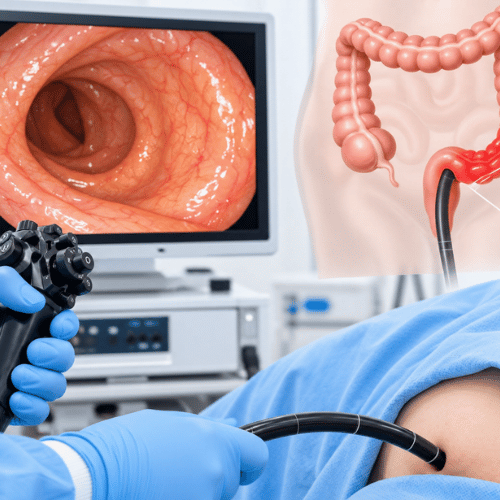
  • Illustration of a colonoscopy examination of the large bowel

    Colonoscopy

    A long flexible tube (colonoscope) is inserted through the anus to examine the entire large bowel.

    Read more about colonoscopy
  • Illustration of a gastroscopy examination of the oesophagus and stomach

    Gastroscopy

    A long flexible tube (gastroscope) is inserted through the mouth to examine the oesophagus (foodpipe) and stomach.

    Read more about gastroscopy
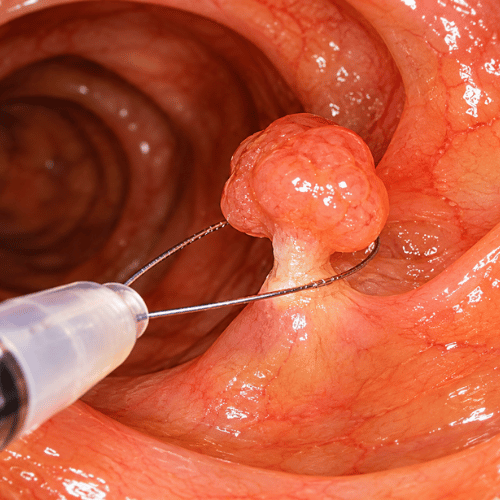
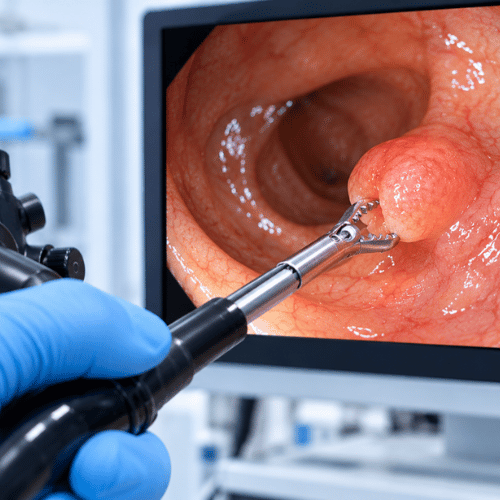
  • Illustration of a bowel polyp being removed during colonoscopy

    Polyp removal

    Polyps are growths that can develop in the bowel. They can often be removed during a colonoscopy to help prevent bowel cancer.

    Read more about polyp removal

Procedures

  • Colonoscopy

    A long flexible tube (colonoscope) is inserted through the anus to examine the entire large bowel.

    Read more
  • Gastroscopy

    A long flexible tube (gastroscope) is inserted through the mouth to examine the oesophagus (foodpipe) and stomach.

    Read more
  • Polyp removal (Polypectomy)

    Polyps are growths that can develop in the bowel. They can often be removed during a colonoscopy to help prevent bowel cancer.

    Read more
  • Flexible sigmoidoscopy

    This procedure is similar to a colonoscopy but less extensive, examining only the left side of the bowel.

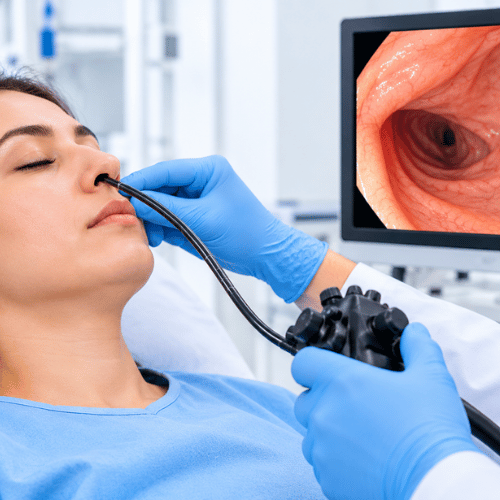
  • Transnasal gastroscopy

    A thin flexible tube (gastroscope) is inserted through the nose to examine the oesophagus (foodpipe) and stomach.

  • Biopsies

    Small painless specimens, around 2mm in size, may be taken during a procedure to help diagnose conditions.
Get in touch