Rectal bleeding in London and Essex
Rectal bleeding can appear as bright red blood on the paper or in the bowl. It can also cause dark red or black stools, and some people have pain, bowel changes or weight loss. Causes range from haemorrhoids and fissures to polyps or bowel disease. Even light bleeding is worth checking, and most causes are simple to treat. Dr Ahmad can help find the cause.
- Consultant Gastroenterologist and Specialist Endoscopist at St Mark's, The National Bowel Hospital
- PhD in colonoscopy quality, Imperial College London
- 4,500+ procedures
Consultations usually available within 1 to 2 weeks, including evenings and weekends, in person or remotely.

The symptoms
Rectal bleeding at a glance
The key facts about rectal bleeding, from the signs to look for to when to get it checked.
Signs
Bright red blood on the toilet paper or in the bowl, or dark red or black stools.
Other signs
Bleeding may come with pain, a change in bowel habit, tiredness or unexplained weight loss.
Causes
Haemorrhoids and small tears are common, but polyps, bowel inflammation and other conditions can also cause bleeding.
Get checked
Even if the bleeding is light or stops on its own, it is worth having it checked so the cause can be found.
Urgent
If you have heavy bleeding, dizziness, fainting or severe pain, call 999 or go to A&E.
Next step
A consultation with Dr Ahmad to assess your symptoms and, if needed, a colonoscopy to examine the whole lining of your large bowel and find the cause.
The symptoms
What rectal bleeding can mean
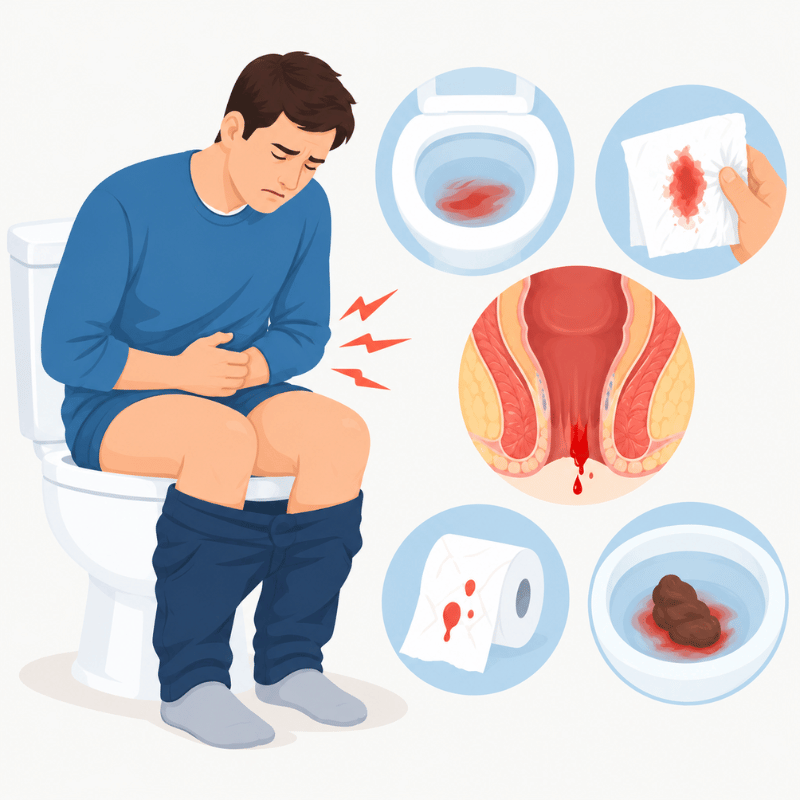
Rectal bleeding is often caused by haemorrhoids or a small tear, but it can also come from polyps, inflammation of the bowel or other conditions. The blood may be bright red on the toilet paper or in the bowl, or dark red or black in the stool. Because the cause cannot be judged by looking at the blood alone, it is always worth having it checked.
Black, sticky, tar-like stools can mean bleeding from higher up, in the stomach or upper gut. If this is new, seek same-day medical advice, especially if you feel dizzy or faint. A gastroscopy may be recommended as well as, or instead of, a colonoscopy. Iron tablets and bismuth-containing indigestion remedies can also turn stools dark, without any bleeding.
Dr Ahmad will start by listening to your symptoms and medical history. If a closer look is needed, a colonoscopy uses a thin, flexible camera to examine the whole lining of your large bowel and find the source of the bleeding. If he finds polyps, most can be removed during the same procedure.
Get checked if you notice:
- Bright red or dark blood, or black stools
- A change in bowel habit, pain, tiredness or weight loss
- Bleeding that keeps coming back, even if it's light
Possible causes of rectal bleeding
Most causes are common and treatable. Only an assessment can tell which one applies to you.
Piles (haemorrhoids)
Everyone has cushions of blood vessels in the back passage. They become piles when they swell or slip down, often from straining. They often cause bright red blood on the paper.
Anal fissure
A small tear in the anal lining. It can cause sharp pain and a little bright red blood.
Diverticular disease
Small pouches in the bowel wall. They can occasionally bleed, sometimes with pain.
Bowel inflammation
Crohn's disease, ulcerative colitis or infection. They can cause bleeding along with diarrhoea.
Bowel cancer
Less common, and more likely with age. It is much more treatable when found early, so bleeding that keeps returning should always be checked.
Piles (haemorrhoids): common, treatable and worth checking
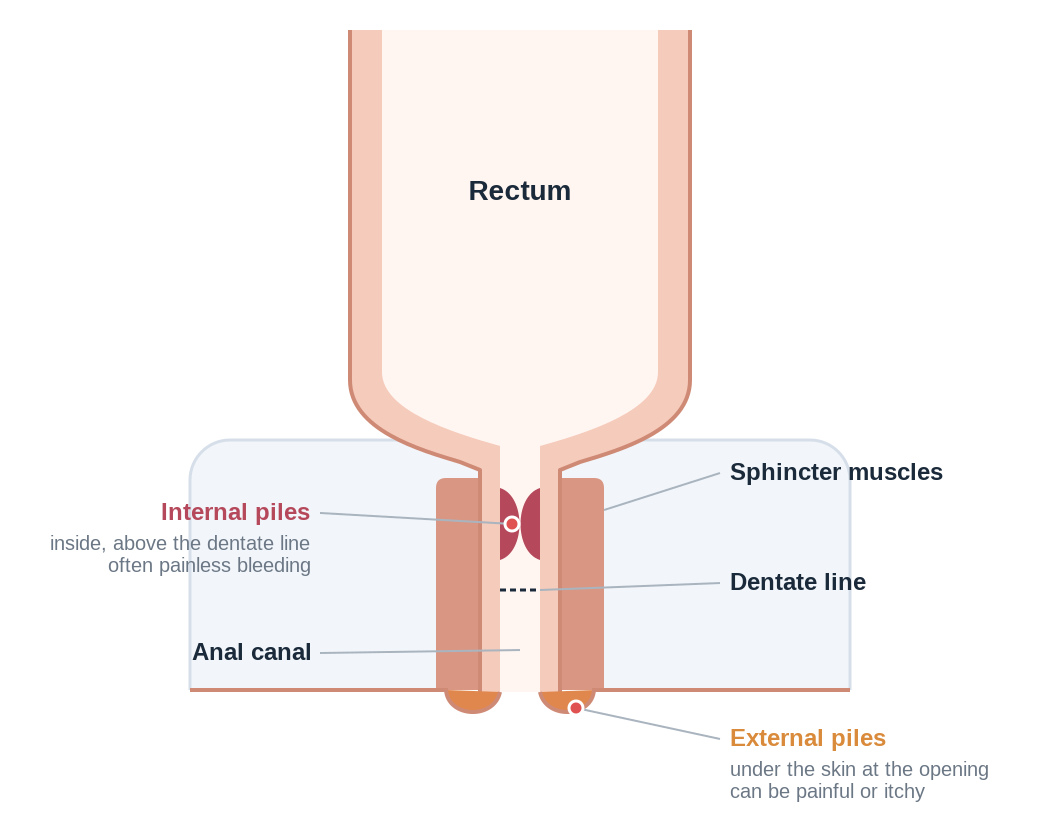
Piles are swollen blood vessels in and around the back passage. They are very common and are rarely dangerous. They can still be uncomfortable, and bleeding should always be checked, because other conditions can look the same.
Internal piles
These sit inside the anal canal, above the dentate line. They often cause painless bleeding, usually bright red blood on the paper or in the toilet. Larger ones may drop down and need pushing back.
External piles
These form under the skin at the opening. They can be painful or itchy, and may feel like a tender lump, especially if a clot forms inside.
What causes them
Piles develop when the veins around the back passage are put under pressure. Common triggers include constipation and straining, sitting for long periods, pregnancy, heavy lifting and a low-fibre diet.
What can help
Most piles settle with simple steps: more fibre and fluids, softer stools, not straining or sitting on the toilet for long, and creams or tablets to ease symptoms. If these do not help, there are quick outpatient treatments, such as banding, and surgery is needed only rarely.
Do not assume it is piles
Bleeding from the back passage can also come from the bowel, including polyps, inflammation or, rarely, cancer. Please see a doctor if you notice bleeding, a change in your bowel habit, unexplained weight loss or low iron. A short examination, and a colonoscopy if needed, can give you a clear answer.
Book a consultationWhy choose Dr Ahmad for your rectal bleeding assessment?
Expert care, clear answers and support at every step.
Consultant-led care
Dr Ahmad sees you himself, from your first consultation to your results. He is a consultant gastroenterologist with a PhD from Imperial College London, has published widely on endoscopy and has carried out more than 4,500 procedures.
Seen quickly
Rectal bleeding is worth checking promptly. Consultations are usually available within 1 to 2 weeks, including evenings and weekends, in person or remotely, so you don’t wait long for answers.
Tests in one place
Your assessment and any tests needed to find the cause of the bleeding can be arranged through Dr Ahmad, so you aren’t passed between services. If a colonoscopy is needed, polyps are removed during the same procedure when it is safe to do so.
Clear answers on the day
If you have a colonoscopy, Dr Ahmad explains the findings before you go home and your report is shared through your secure patient portal. If samples are taken, he’ll review the results with you in clinic about two weeks later.
How we find the cause
From your first appointment to a clear answer.
Consultation
Dr Ahmad listens to your symptoms and history.
Examination
A gentle examination of your tummy and, where appropriate, a rectal examination to check for piles or a fissure.
Tests if needed
Blood tests to check for anaemia and inflammation, and, if appropriate, a FIT stool test for hidden blood or a stool test for infection.
Camera test if needed
A colonoscopy or flexible sigmoidoscopy to see the bowel lining, with any polyps removed when it is safe to do so. A gastroscopy may be advised if you have black stools.
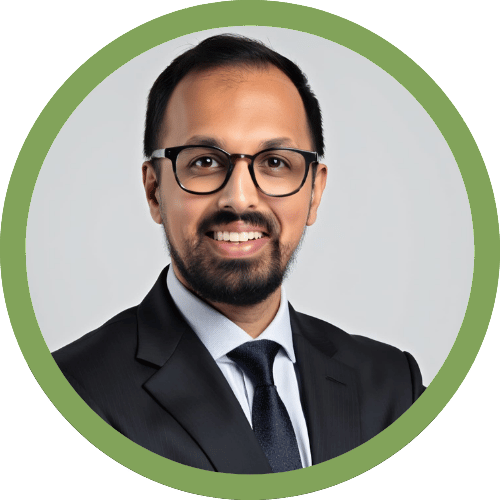
Your specialist, Dr Ahmir Ahmad
Consultant Gastroenterologist and Specialist Endoscopist
Dr Ahmad qualified in medicine from University College London in 2010. He completed a four-year specialist endoscopy fellowship at St Mark’s Hospital from 2018 to 2022, and a PhD at Imperial College London in 2023 on improving the quality of colonoscopy, so that polyps and early bowel cancers are found more reliably. His specialist interests include investigating bowel symptoms such as rectal bleeding, complex polyp removal, endoscopic mucosal resection (EMR) and optical diagnosis. He continues to perform colonoscopy at St Mark’s, The National Bowel Hospital, and has carried out more than 4,500 procedures.
- Qualifications MBBS, BSc, MRCP, PhD
- Professional registration GMC 7090128 · Specialist Register
- Practises at Welbeck London · Nuffield Brentwood · Spire Hartswood · St Mark’s TrustPlus
- Experience 4,500+ procedures
Medically reviewed by Dr Ahmir Ahmad. Last reviewed 28 October 2026.
Testimonials
What patients say
What patients say about their consultations and procedures.
“I have absolute faith in Dr Ahmad, he is concise and caring at the same time and always checks to make sure that you know what’s what.”
“Dr Ahmir made me feel so comfortable and safe and informed throughout my consultations and procedure. I was very nervous but his professionalism and care made the entire process very comfortable and I would highly recommend him. Thank you!”
“Dr Ahmad is very professional and has excellent personal skills. I felt immediately impressed and assured on his high level of expertise. Took a good amount of time to throughly look at my issues. Then reacted immediately with a quick plan to move forward. Excellent professional.”
Frequently asked questions
-
Rectal bleeding means passing blood from your back passage. You might see it on the toilet paper, in the toilet bowl or mixed in with your stool. It’s common, and most of the time the cause is minor, but it’s always worth getting checked.
-
The main sign is blood when you open your bowels. It may be bright red or dark, and it can come with pain, itching, a change in bowel habit, bloating, tiredness or unexplained weight loss.
-
Haemorrhoids (piles) and small tears in the skin of the back passage (anal fissures) are the most common causes. Polyps, bowel inflammation, infection and, less often, bowel cancer can also cause bleeding, which is why it’s worth having it looked at.
-
Bright red blood usually comes from low down, near the back passage. Dark red or black, tar-like stools can mean bleeding from higher up in the bowel or stomach. The colour is only a clue, so it can’t tell you the cause on its own.
-
See a doctor promptly if the bleeding keeps coming back or lasts more than a few days, or if you have a change in bowel habit, unexplained weight loss, tiredness or anaemia, or a family history of bowel cancer. Heavy bleeding, dizziness, fainting or severe pain need urgent help, so call 999 or go to A&E.
-
No. Many cases are caused by haemorrhoids or a small tear and settle with simple treatment. But you can’t tell the cause by looking, so any bleeding that is new, keeps happening or comes with other symptoms should be checked.
-
See a doctor if you notice blood more than once, if it doesn’t settle within a few days, or if you have any of the warning signs above. If you're 50 or over, any unexplained rectal bleeding should be checked promptly, even a single episode. If you're under 50, get checked promptly if the bleeding comes with tummy pain, a change in bowel habit, weight loss or anaemia. You don't need a GP referral to book if you're paying for yourself. If you're using health insurance, your insurer may ask for a GP referral before authorising your consultation, so check with them first.
-
Dr Ahmad will ask about your symptoms and medical history and may do a rectal examination. You may also have blood tests, for example to check for anaemia, and, if appropriate, a stool test called FIT, which looks for hidden blood. If the cause isn't clear, you may be advised to have a colonoscopy.
-
Not everyone does. A colonoscopy is usually recommended if you’re older, if the bleeding is persistent, or if you have other symptoms or risk factors. It lets the doctor see the whole lining of the large bowel, find the source of the bleeding and take biopsies if needed.
-
Treatment depends on the cause. Haemorrhoids and fissures often improve with diet changes, medicines or minor procedures. Polyps can usually be removed during a colonoscopy, and bowel inflammation is treated with medication. Once the cause is clear, Dr Ahmad will talk you through the options. Many people need only simple measures, such as eating more fibre, drinking more fluid and avoiding straining.
-
Rarely. Piles usually cause small amounts of bright red blood. If you're anaemic or low in iron, Dr Ahmad will look for another cause rather than assume it's piles.
-
Blood thinners can make bleeding more noticeable, but they don't usually cause it on their own. They can reveal a problem, such as a polyp, that needs checking. Don't stop your blood thinner without speaking to the doctor who prescribed it.
-
Many people worry about this. Dr Ahmad will explain everything first, a chaperone is offered, and you can ask to stop at any time. Most people find it quicker and easier than they expected.
Get in touch
Have a question about rectal bleeding or colonoscopy? We’re happy to help.
-
Call now
Phone
07435 081678Dr Ahmad’s secretary, Monday – Friday, 9:00am – 5:00pm
-
Send an email
Email
clinic@drahmirahmad.com
Clinic times
-
Monday12:00–14:00Welbeck London
-
Tuesday08:00–09:00St Mark’s TrustPlus
-
Wednesday10:30–12:00Spire Hartswood14:00–16:00Nuffield Brentwood18:00–20:00Welbeck London
-
Saturday09:00–11:00Spire Hartswood or Nuffield Brentwood
-
Monday
Worried about rectal bleeding?
See Dr Ahmad to find the cause at Welbeck London, Nuffield Brentwood, Spire Hartswood or St Mark’s TrustPlus. Consultations are available in person, by video or by phone.