Polyp removal in London and Essex
Polyp removal (polypectomy) is a procedure to remove growths from the lining of your large bowel before they have the chance to cause problems. Removing polyps is one of the most effective ways to help reduce your risk of bowel cancer. Dr Ahmad aims to remove them safely during the same procedure and send them for testing, so most polyps are treated in a single visit, with laboratory results about two weeks later.
- Consultant Gastroenterologist and Specialist Endoscopist at St Mark's, The National Bowel Hospital
- PhD in colonoscopy quality, Imperial College London
- 4,500+ procedures
Consultations usually available within 1 to 2 weeks, including evenings and weekends, in person or remotely.

The procedure
Polyp removal at a glance
The key facts about your polyp removal with Dr Ahmir Ahmad, from preparation to results.
How long
The procedure usually takes about 30 to 60 minutes, depending on the size and number of polyps.
Your visit
Plan for around half a day, including recovery.
Comfort
Choose from no sedation, gas and air (Entonox), light sedation or, at Welbeck London, deep sedation given by an anaesthetist.
Before
A pre-assessment call, a low-fibre diet, then a bowel-cleansing preparation. If you take blood-thinning medicines, If you take blood-thinning medicines, the pre-assessment team will advise whether you need to adjust them beforehand.
Results
Your report is shared through your secure patient portal on the day. Removed polyps are sent to the laboratory, and you’ll have a clinic follow-up about two weeks later to go through the results and any follow-up plan.
Where
Welbeck London, Nuffield Brentwood, Spire Hartswood and St Mark’s TrustPlus.
The procedure
What polyp removal involves
Polyp removal (polypectomy) is carried out during a colonoscopy. A thin, flexible camera is guided around your large bowel, and any polyps Dr Ahmad finds are removed with small instruments passed through the scope, if it is safe to do so at the time. Removing polyps is one of the most effective ways to help reduce your risk of bowel cancer.
Dr Ahmad carries out every procedure himself, supported by the hospital’s experienced endoscopy nursing team. Polyp removal usually takes about 30 to 60 minutes, depending on the size and number of polyps. Multiple or very large polyps may need a separate, planned procedure.
- ☑A pre-assessment call, then a low-fibre diet and bowel preparation, with advice on any blood-thinning medicines
- ☑Choice of no sedation, light sedation or, at Welbeck London, deep sedation given by an anaesthetist
- ☑Home the same day
- ☑Findings explained and your report shared on the day, with removed polyps sent for testing
Removing polyps lowers the risk of bowel cancer by interrupting this pathway.
The procedure
What polyp removal involves
Polyp removal (polypectomy) is carried out during a colonoscopy. A thin, flexible camera is guided around your large bowel, and any polyps Dr Ahmad finds are removed with small instruments passed through the scope, if it is safe to do so at the time. Removing polyps is one of the most effective ways to help reduce your risk of bowel cancer.
Dr Ahmad carries out every procedure himself, supported by the hospital’s experienced endoscopy nursing team. Polyp removal usually takes about 30 to 60 minutes, depending on the size and number of polyps. Multiple or very large polyps may need a separate, planned procedure.
- ☑A pre-assessment call, then a low-fibre diet and bowel preparation, with advice on any blood-thinning medicines
- ☑Choice of no sedation, light sedation or, at Welbeck London, deep sedation given by an anaesthetist
- ☑Home the same day
- ☑Findings explained and your report shared on the day, with removed polyps sent for testing
Normal bowel lining
Small polyp
Removing the polyp stops the process
Larger polyp
Early cancer
Dr Ahmad chooses the technique that suits each polyp’s size, shape and position.
After your procedure
What your polyp results mean
Every polyp that is removed is examined under a microscope. The type, size and number of polyps decide what follow-up you need. This page follows the 2020 BSG/ACPGBI/PHE post-polypectomy surveillance guidelines.
The three main types of polyp
-
Hyperplastic polyp
Common. Small ones in the rectum (under 5 mm) are harmless and don’t affect your follow-up. Elsewhere in the bowel, or if 10 mm or larger, they are grouped with serrated polyps.
-
Adenoma
The most common type removed. It can slowly turn into cancer if left, which is why it is removed.
-
Sessile serrated lesion
Flatter and harder to spot. It can also turn into cancer if left.
What happens next
After your polyps are testedFollow-up colonoscopy in 3 years
You will be offered this if you had either:
- 5 or more adenomas or serrated polyps, or
- 2 or more adenomas or serrated polyps, including at least one “advanced” polyp
What is an “advanced” polyp? An adenoma 10 mm or larger or with high-grade dysplasia, or a serrated polyp 10 mm or larger or with any dysplasia.
Return to routine NHS bowel screening
This applies to everyone else. No colonoscopy follow-up is needed.
Some situations need a different plan, for example a large polyp removed in pieces (site checks at 2–6 months and 18 months), a polyp that may not have been fully removed, early cancer, or a strong family history. Follow-up colonoscopy is usually only offered to people under 75. Dr Ahmad will explain your plan at your results appointment.
Understanding your polyp description
- Raised Paris 0-Is A dome sitting directly on the lining. The most common shape.
- Flat Paris 0-II Level with, or only just above, the lining.
- Stalked Paris 0-Ip A polyp on a stalk, like a mushroom.
The procedure
What polyp removal involves
Polyp removal (polypectomy) is carried out during a colonoscopy. A thin, flexible camera is guided around your large bowel, and any polyps Dr Ahmad finds are removed with small instruments passed through the scope, if it is safe to do so at the time. Removing polyps is one of the most effective ways to help reduce your risk of bowel cancer.
Dr Ahmad carries out every procedure himself, supported by the hospital’s experienced endoscopy nursing team. Polyp removal usually takes about 30 to 60 minutes, depending on the size and number of polyps. Multiple or very large polyps may need a separate, planned procedure.
- ☑A pre-assessment call, then a low-fibre diet and bowel preparation, with advice on any blood-thinning medicines
- ☑Choice of no sedation, light sedation or, at Welbeck London, deep sedation given by an anaesthetist
- ☑Home the same day
- ☑Findings explained and your report shared on the day, with removed polyps sent for testing
Dr Ahmad chooses the technique that suits each polyp’s size, shape and position.
How polyps are removed
Polyp removal (polypectomy) can be done in different ways, depending on the size, shape and position of each polyp. Dr Ahmad chooses the safest option for you, and in most cases removal happens during the same colonoscopy.
| Comparison | Standard polypectomy | Endoscopic mucosal resection (EMR) |
|---|---|---|
| Used for | Small and medium polyps | Larger or flatter polyps |
| How it is done | The polyp is removed with a thin wire loop or small forceps | A small injection first lifts the polyp away from the bowel wall, then it is removed with a wire loop |
| After removal | One or more clips may be placed to protect the area | One or more clips may be placed to protect the area |
| Testing | Every polyp removed is sent to the laboratory | Every polyp removed is sent to the laboratory |
| Surgery | Not usually needed | Can often avoid the need for more complex procedures or surgery |
If a polyp is very large or complex, its removal may be planned as a separate procedure. For a small number of polyps, a more specialised technique called endoscopic submucosal dissection (ESD) may be the best option. If ESD is the right option for you, Dr Ahmad will discuss it with you and arrange it with a specialist team.
What to expect
How a polyp is removed during your colonoscopy.
-
1
Finding the polyp
Dr Ahmad passes the colonoscope through your bowel and examines each polyp to decide how best to remove it.
-
2
Removal
He removes the polyp with a wire loop or small forceps. For a larger polyp, a small injection lifts it first (EMR). You won’t feel the removal itself.
-
3
Protecting the area
If needed, he places one or more clips over the area where the polyp was removed.
-
4
Testing and recovery
Every polyp is sent to the laboratory. You may have mild cramping or bloating afterwards, and the team will tell you which symptoms need urgent attention.
Dr Ahmad will explain which technique suits you, and the risks, before you give your consent.
Book a consultationYour appointment
What happens on the day
From arrival to going home, plan for around half a day, including preparation, the removal procedure and recovery.
Step 1: Before the day
The pre-assessment team will contact you to review your medical history and medicines. Some, such as blood thinners, may need adjusting beforehand to lower the risk of bleeding. They’ll also explain how to take your bowel preparation so your bowel is clear enough for the polyps to be seen and removed safely.
Step 2: Arrive and settle in
A nurse will admit you and check your details. Dr Ahmad will explain how the polyps will be removed, what the risks are, and answer your questions before asking for your consent. At Welbeck London, the anaesthetist will also see you to discuss your sedation options.
Step 3: The polyp removal
Dr Ahmad guides the colonoscope through your large bowel and removes any polyps using a thin wire loop or small forceps. Larger or flatter polyps may first be lifted with a small injection (EMR). You won’t feel the removal itself. Every polyp is sent to the laboratory for testing. If one is very large, its removal may be planned as a separate procedure.
Step 4: Recover and go home
You'll rest in recovery with a drink and a light snack. Dr Ahmad explains what was removed, your report is shared through your secure patient portal, and he'll go through the laboratory results with you in clinic about two weeks later. If you had sedation, an adult must take you home, and you shouldn't drive, drink alcohol or sign important documents for 24 hours.
Why choose Dr Ahmad for polyp removal?
Safe removal, clear answers and support at every step.
Consultant-led care
Dr Ahmad removes your polyps himself. He is a consultant gastroenterologist with a PhD in colonoscopy, has published on the procedure and has carried out more than 4,500 procedures.
Removed in one visit
Polyps are removed during your procedure when it is safe to do so, so you often avoid a second visit. Multiple or very large polyps may need a separate, planned therapeutic procedure.
Your comfort matters
You won't feel the removal itself. Dr Ahmad uses modern water-assisted insertion techniques to help improve comfort, and you can choose the level of sedation or pain relief that suits you.
Clear answers and results
Dr Ahmad explains what he removed before you go home, and your report is shared through your secure patient portal. Every polyp is tested, and he’ll review the results with you in clinic about two weeks later.
Polyp removal quality you can check
Polyps are found and removed during colonoscopy, so these figures show how thoroughly Dr Ahmad looks for them. Results are from the National Endoscopy Database, January 2025 to October 2026 (421 colonoscopies).
Polyp detection rate
53%
How often polyps are found. Polyps can develop into bowel cancer, so finding and removing them matters.
The standardThe standard: NED indicative minimum 15% · aspirational target 20%
Average withdrawal time
14minutes
and above 10 minutes in every quarter
The time spent carefully examining the bowel lining on the way out, when most polyps are found.
The standardNational minimum standard: mean of at least 6 minutes · aspirational target: mean of at least 10 minutes
Caecal intubation rate
96%
How often the camera reaches the far end of the bowel, so polyps can be looked for along the whole colon.
The standardNational minimum standard: 90% · aspirational target: 95%
Polyp retrieval
Around99%
How often removed polyps are recovered and sent to the laboratory. The results confirm what was removed and guide any further treatment or surveillance.
The standardNational minimum standard: 90%
Comfort
Fewer than2%
with moderate or severe discomfort
Over 98% of procedures were assessed as causing no more than mild discomfort. Around a third were performed without sedation.
The standardBSG aim: fewer than 10% of patients with moderate or severe discomfort
These figures are from Dr Ahmad’s own audited data and are not a guarantee of individual outcomes.
Book a consultation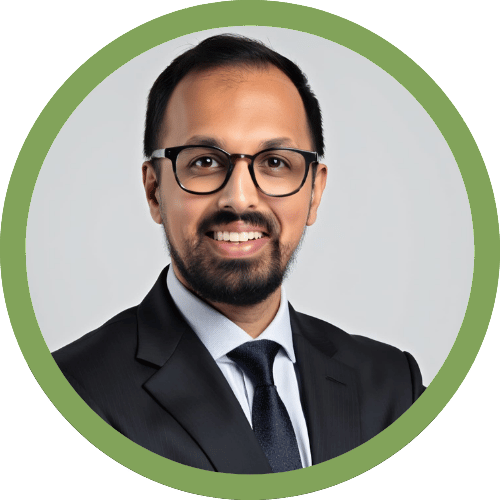
Your specialist, Dr Ahmir Ahmad
Consultant Gastroenterologist and Specialist Endoscopist
Dr Ahmad qualified in medicine from University College London in 2010. He completed a four-year specialist endoscopy fellowship at St Mark’s Hospital from 2018 to 2022, and a PhD at Imperial College London in 2023 on improving the quality of colonoscopy, so that polyps and early bowel cancers are found more reliably. His specialist interests include complex polyp removal, endoscopic mucosal resection (EMR) and optical diagnosis, which helps decide how each polyp is best treated. He continues to perform colonoscopy and polyp removal at St Mark’s, The National Bowel Hospital, and has carried out more than 4,500 procedures.
- Qualifications MBBS, BSc, MRCP, PhD
- Professional registration GMC 7090128 · Specialist Register
- Practises at Welbeck London · Nuffield Brentwood · Spire Hartswood · St Mark’s TrustPlus
- Experience 4,500+ procedures
Medically reviewed by Dr Ahmir Ahmad. Last reviewed 20 October 2026.
Testimonials
What patients say
What patients say about their consultations and procedures.
“Dr Ahmad is an extremely professional and knowledgeable doctor that instills confidence in his patient. Despite an unexpected event during a colonoscopy he was calm and reassuring and I cannot fault his aftercare.”
“I have absolute faith in Dr Ahmad, he is concise and caring at the same time and always checks to make sure that you know what’s what.”
“Dr Ahmir made me feel so comfortable and safe and informed throughout my consultations and procedure. I was very nervous but his professionalism and care made the entire process very comfortable and I would highly recommend him. Thank you!”
“Dr Ahmad is very professional and has excellent personal skills. I felt immediately impressed and assured on his high level of expertise. Took a good amount of time to throughly look at my issues. Then reacted immediately with a quick plan to move forward. Excellent professional.”
Frequently asked questions
-
A polypectomy is a procedure to remove polyps, which are small growths on the lining of the bowel. It is usually done during a colonoscopy. Removing polyps matters because some can develop into bowel cancer over time. Larger or flatter polyps may be removed using endoscopic mucosal resection (EMR), a specialist type of polypectomy in which the polyp is lifted with a small injection before removal.
-
Dr Ahmad passes a colonoscope, a thin flexible tube with a camera, through your bowel to find the polyps. He then removes them using a thin wire loop or small forceps. For larger polyps, he may first lift the lining with a small injection (EMR) so the polyp can be removed safely. Every polyp removed is sent to the laboratory for testing.
-
Most polyps can be removed straight away. A very large or complex polyp may need a separate, planned procedure, using EMR or, occasionally, endoscopic submucosal dissection (ESD), a specialist technique for removing larger or early cancerous polyps in one piece. If ESD is the right option for you, Dr Ahmad will discuss it with you and arrange it with a specialist team. Surgery is rarely needed.
-
Preparation is the same as for a colonoscopy: a low-fibre diet for two days, then a bowel-cleansing preparation. A well-prepared bowel is especially important, as it gives Dr Ahmad clearer views of any polyps. If you take blood thinners (such as warfarin, apixaban, rivaroxaban or clopidogrel), the preassessment team will tell you whether to pause them and for how long. Don't stop them without advice.
-
No. You won’t feel the removal itself, and sedation or pain relief is available if you want it. Afterwards, you may have mild cramping, bloating or wind, which usually settles within a day or two.
-
A polypectomy is generally safe, but like any procedure it carries some risks. The most common is bleeding, which can happen during the procedure or in the days or weeks afterwards. Rarely, the bowel wall can be damaged (a perforation). The risk depends on the size and position of the polyps, the technique used and your general health. Dr Ahmad will explain the risks, and how they apply to you, before you give your consent.
-
Most people are back to normal activities the next day. Mild cramping, bloating or wind usually settle within a day or two. After removal of a large polyp, you may be advised to avoid heavy lifting, strenuous exercise and flying for a short time. Contact the hospital urgently if you have severe or worsening tummy pain, a fever, or bleeding that is more than a few teaspoons or is increasing. Bleeding can occasionally happen up to two weeks after polyp removal, so keep the out-of-hours numbers below to hand.
-
They are sent to the laboratory, where they are examined under a microscope. The results show what type of polyps they were and whether any further treatment or follow-up is needed. Dr Ahmad will review the results with you in clinic.
-
Yes, new polyps can develop over time, even after complete removal. This is why some people are advised to have follow-up colonoscopies. Dr Ahmad will recommend a plan based on what was found.
-
Polyp removal during a colonoscopy is usually covered by health insurance when the colonoscopy itself is covered. Because nobody knows until the day whether polyps will be found, ask your insurer to authorise the diagnostic code (H2002) and both therapeutic codes (H2003 and H2350). If you have questions about codes or authorisation, contact Dr Ahmad's secretary on 07435 081678 or at clinic@drahmirahmad.com.
-
The laboratory report names the type of polyp. Small hyperplastic polyps in the rectum are common and harmless. Adenomas and sessile serrated lesions can turn into cancer over many years if left, which is why they are removed. Dr Ahmad will explain your result and what it means for you at your results appointment.
-
It depends on the number, size and type of polyps removed. Many people return to routine bowel screening; others are advised to have a follow-up colonoscopy after three years, in line with national guidance. If a large polyp (20 mm or more) was removed in pieces, the site is checked twice to make sure nothing has regrown: first 2 to 6 months after removal, then again 18 months after the original removal. If both checks are clear, the next colonoscopy is usually three years later. Dr Ahmad will explain the plan for you at your results appointment.
-
This is uncommon. If early cancer is found within a polyp, removal is sometimes all the treatment needed. Dr Ahmad will discuss the result with you in person, and, if needed, arrange scans and a review by a specialist bowel (colorectal) surgeon.
-
Yes. Photographs of each polyp are included in your report, and Dr Ahmad can go through them with you.
Get in touch
Have a question about polyp removal? We’re happy to help.
-
Call now
Phone
07435 081678Dr Ahmad’s secretary, Monday – Friday, 9:00am – 5:00pm
-
Send an email
Email
clinic@drahmirahmad.com
Clinic times
-
Monday12:00–14:00Welbeck London
-
Tuesday08:00–09:00St Mark’s TrustPlus
-
Wednesday10:30–12:00Spire Hartswood14:00–16:00Nuffield Brentwood18:00–20:00Welbeck London
-
Saturday09:00–11:00Spire Hartswood or Nuffield Brentwood
-
Monday
Advice after your procedure
Office hours
Contact Dr Ahmad’s secretary on 07435 081678 or at clinic@drahmirahmad.com.
- Monday – Friday 9:00am – 5:00pm
Out of hours
Contact the hospital where you were treated for advice:
- Spire Hartswood 01277 232525
- Nuffield Brentwood 01277 695695
- Welbeck London 020 3653 2004
- St Mark’s TrustPlus 020 8864 3232
Looking for a polyp removal specialist?
See Dr Ahmad at Welbeck London, Nuffield Brentwood, Spire Hartswood or St Mark’s TrustPlus. Consultations are available in person, by video or by phone.