Irritable bowel syndrome (IBS) in London and Essex
IBS is a common long-term condition of the gut. It can cause tummy pain, bloating, diarrhoea or constipation, often for years. Dr Ahmad can rule out other causes, confirm the diagnosis and help you find a plan that eases your symptoms.
- Consultant Gastroenterologist and Specialist Endoscopist at St Mark's, The National Bowel Hospital
- PhD in colonoscopy quality, Imperial College London
- 4,500+ procedures
Consultations usually available within 1 to 2 weeks, including evenings and weekends, in person or remotely.

The condition
IBS at a glance
The key facts about irritable bowel syndrome, from the signs to look for to when to get checked.
Signs
Tummy pain or cramps, often linked to opening your bowels, with bloating and a change in how often or how loosely you go.
Types
IBS may lean towards diarrhoea, constipation or a mix of both, and it can change over time.
Causes
The exact cause is not known. Changes in how the gut and brain communicate, gut sensitivity, stress, food and past gut infections can all play a part.
Get checked
Symptoms that last more than a few weeks, or keep coming back, are worth a proper assessment so that other conditions are not missed.
Urgent
Bleeding from your back passage, weight loss you can’t explain, waking at night with symptoms, a lump in your tummy or a family history of bowel or ovarian cancer need prompt review. If you have heavy bleeding or severe pain, call 999 or go to A&E.
Next step
A consultation with Dr Ahmad to review your symptoms, arrange tests if needed and agree a plan.

The condition
What IBS means
IBS is a common condition in which the gut and brain don’t communicate as smoothly as they should. The bowel can become more sensitive, so normal digestion, such as gas and stretching, is felt as pain or bloating and food may move through it too quickly or too slowly. The bowel itself looks normal, which is why scans and camera tests are usually normal in IBS. IBS doesn’t damage the bowel or lead to bowel cancer. IBS is a recognised medical condition, now classed as a disorder of gut-brain interaction. The symptoms are real, not imagined.
IBS is diagnosed from your symptoms, together with simple blood and stool tests to check for conditions such as coeliac disease and inflammatory bowel disease. Dr Ahmad will listen to your symptoms and ask about your diet, stress and family history. A colonoscopy is only needed if your age, symptoms or test results suggest another cause.
IBS often causes:
- Tummy pain with bloating or wind
- Diarrhoea, constipation or swings between the two
- Symptoms that come and go, often after meals or stress
Understanding IBS
Why IBS causes symptoms
Irritable bowel syndrome (IBS) is a common, long-term condition that affects how the gut feels and behaves. Your gut and brain are in constant contact through nerves and chemical signals, often called the gut–brain connection.
In a typical gut, normal activity such as digestion and movement goes largely unnoticed. In IBS, the gut can become more sensitive, as if the volume has been turned up. The same activity is then felt as pain, bloating or urgency.
What this means for you
- IBS is real and very common. It does not damage the bowel or increase your risk of bowel cancer.
- Symptoms often come and go, and can be triggered by certain foods, stress or a recent gut infection.
- Other conditions can look similar, so Dr Ahmad may suggest tests before confirming IBS.
- Many people improve with changes to diet and routine, and with medicines or gut-directed therapies where needed.
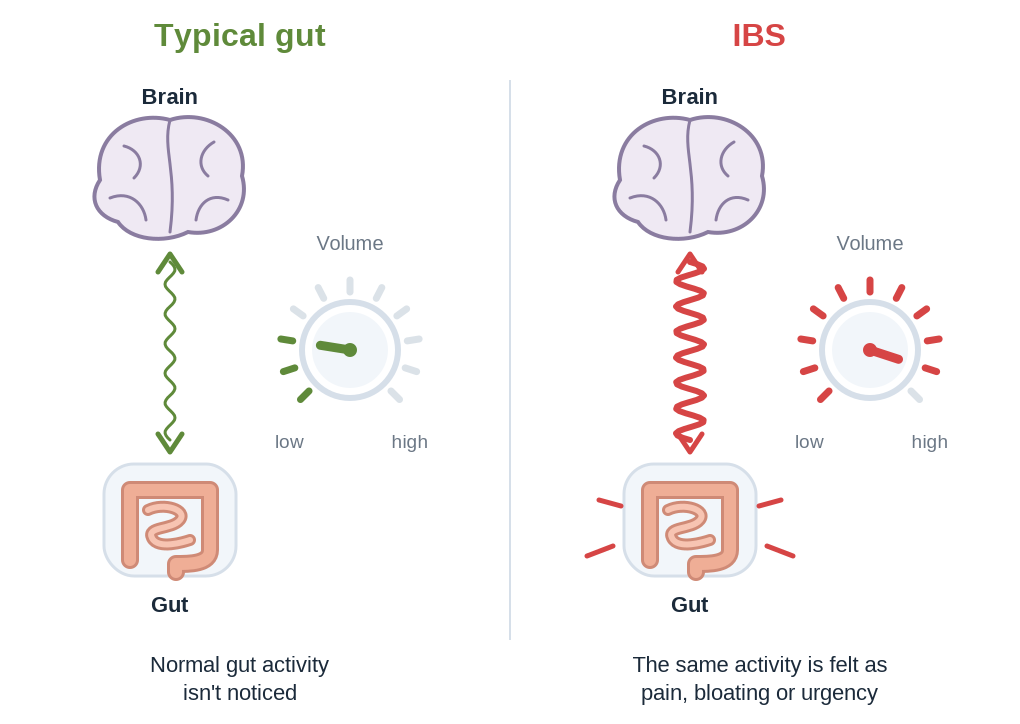
This diagram is a general guide and not a diagnosis. Everyone’s symptoms are different.
See a doctor promptly if you notice blood in your stools, unexplained weight loss, black stools, difficulty swallowing or symptoms that wake you at night. These are not typical of IBS and should be checked.
Book a consultationTypes of IBS
IBS is grouped by the bowel habit you notice most. Your type helps guide treatment. The Bristol stool chart below can help you describe your type.
IBS with diarrhoea (IBS-D)
Loose, frequent stools, often with urgency and cramping pain.
IBS with constipation (IBS-C)
Hard, infrequent stools, straining and a feeling of not emptying fully.
Mixed IBS (IBS-M)
Periods of diarrhoea and constipation, sometimes within the same week.
Some people don’t fit neatly into one group. This is called unclassified IBS (IBS‑U). Your type can also change over time.
Possible causes of IBS
No single cause has been found. Several factors can combine, and they differ from person to person.
Sensitive gut
The gut's nerves can be turned up, so normal digestion is felt as pain and bloating.
Stress and anxiety
The gut and brain are closely linked, so stress can bring on or worsen symptoms.
Food triggers
Some foods and drinks, such as fatty meals, caffeine or alcohol, can set symptoms off.
Past gut infection
IBS sometimes starts after a stomach bug or food poisoning.
Gut bacteria
Changes in the balance of bacteria in the gut may play a part.
Gut movement
Food moving through the bowel too quickly or too slowly can cause diarrhoea or constipation.
Bristol Stool Chart
The Bristol Stool Chart sorts stools into seven types, from separate hard lumps (Type 1) to entirely liquid (Type 7). Each row shows a drawn picture, a plain description and what it means, and the colour on the left groups the types into constipation, healthy, borderline and diarrhoea. If you live with IBS, noting your usual type each day shows whether your pattern leans towards constipation or diarrhoea, and gives us a clear record to work from at your consultation.
Book a consultationSee a doctor if changes last more than a few weeks, or with blood, severe pain or weight loss.
Why choose Dr Ahmad for your IBS assessment?
Expert care, clear answers and support at every step.
Consultant-led care
Dr Ahmad sees you himself, from your first consultation to your results. He is a consultant gastroenterologist with a PhD from Imperial College London, has published widely on endoscopy and has carried out more than 4,500 procedures.
Seen quickly
Consultations are usually available within 1 to 2 weeks, including evenings and weekends, in person or remotely.
Tests and support in one place
Blood and stool tests, and a colonoscopy if needed, can be arranged through Dr Ahmad, so you aren’t passed between services. He can also refer you to a specialist dietitian at Welbeck London and arrange gut-directed psychological therapy.
A plan you understand
You leave with a clear explanation of what may be causing your symptoms, which tests (if any) you need, and what happens next.
How IBS is diagnosed
From your first appointment to a clear answer.
Consultation
Dr Ahmad listens to your symptoms, diet and history.
Examination
An examination of your tummy and, if needed, a rectal examination.
Tests if needed
Blood tests for coeliac disease, anaemia and inflammation, and a stool test (faecal calprotectin) to check for inflammation in the bowel. A colonoscopy or other tests are only needed if your symptoms or results suggest another cause.
Your diagnosis and plan
Dr Ahmad explains the diagnosis and agrees a plan with you, which may include diet changes, medicines, a specialist dietitian or gut-directed therapy.

Your specialist, Dr Ahmir Ahmad
Consultant Gastroenterologist and Specialist Endoscopist
Dr Ahmad qualified in medicine from University College London in 2010. He completed a four-year specialist endoscopy fellowship at St Mark’s Hospital from 2018 to 2022, and a PhD at Imperial College London in 2023 on improving the quality of colonoscopy, so that polyps and early bowel cancers are found more reliably. He has a special interest in diagnosing bowel conditions such as irritable bowel syndrome (IBS) and in making sure other causes of your symptoms are not missed. He continues to see patients and perform colonoscopy at St Mark’s, The National Bowel Hospital, and has carried out more than 4,500 procedures.
- Qualifications MBBS, BSc, MRCP, PhD
- Professional registration GMC 7090128 · Specialist Register
- Practises at Welbeck London · Nuffield Brentwood · Spire Hartswood · St Mark’s TrustPlus
- Experience 4,500+ procedures
Medically reviewed by Dr Ahmir Ahmad. Last reviewed 28 October 2026.
Testimonials
What patients say
What patients say about their consultations and procedures.
“Dr Ahmir made me feel so comfortable and safe and informed throughout my consultations and procedure. I was very nervous but his professionalism and care made the entire process very comfortable and I would highly recommend him. Thank you!”
“I was dealt with very sympathetically and professionally by Dr Ahmad, this was over the course of three consultations and an endoscopy. Any worries I had about the treatment were unfounded and the endoscopy was a quick and painless procedure. I was quickly reassured there were no significant issues and have been discharged back to my GP. So pleased to have been under Dr Ahmad’s care.”
“Dr Ahmad is very professional and has excellent personal skills. I felt immediately impressed and assured on his high level of expertise. Took a good amount of time to throughly look at my issues. Then reacted immediately with a quick plan to move forward. Excellent professional.”
Frequently asked questions
-
Irritable bowel syndrome (IBS) is a common long-term condition of the gut. It causes tummy cramps, bloating, diarrhoea or constipation. The bowel looks normal on tests, but it doesn’t work as it should.
-
The exact cause isn’t known. It is linked to the gut moving food too quickly or too slowly, oversensitive gut nerves, stress and family history. Often several of these factors play a part. In some people, it starts after a bout of gastroenteritis or food poisoning.
-
The main symptoms are tummy pain or cramps, often worse after eating and eased by opening your bowels, and bloating. You may have diarrhoea, constipation or both, pass mucus, or feel that you haven’t fully emptied your bowels. Tiredness, nausea and backache are also common.
-
There’s no single test for IBS. It is diagnosed from your symptoms, together with simple tests to check for other conditions. These usually include blood tests for anaemia, inflammation and coeliac disease, and a stool test called faecal calprotectin, which helps tell IBS apart from inflammatory bowel disease.
-
No. IBD causes inflammation and damage in the bowel, which tests can show. In IBS, tests are usually normal, and it doesn’t damage the bowel or lead to bowel cancer.
-
Some conditions can cause similar symptoms, including coeliac disease, inflammatory bowel disease, bile acid diarrhoea and microscopic colitis. These are treated differently, so it’s important to check for them, especially if your symptoms are mainly diarrhoea. Dr Ahmad will arrange the right tests based on your symptoms.
-
Get checked if your symptoms last more than a few weeks. Get checked promptly if you notice blood from your back passage, unexplained weight loss, a lasting change in bowel habit, or a family history of bowel cancer. Women over 50 with new IBS-type symptoms, such as persistent bloating, should also be checked, as these can occasionally be a sign of ovarian problems.
-
Not everyone does. A colonoscopy is usually advised if you’re older, have bleeding, weight loss or a family history of bowel cancer, have persistent diarrhoea, or if the cause isn’t clear. For persistent diarrhoea, small samples (biopsies) can also check for microscopic colitis, which can feel like IBS. Dr Ahmad will advise whether it’s right for you.
-
No single diet suits everyone. Start with regular meals, plenty of fluids, and cutting back on caffeine, alcohol, fizzy drinks and fatty or spicy food. Soluble fibre, such as ispaghula (psyllium), can help, while bran can make bloating worse. If symptoms continue, a low FODMAP diet helps many people, but it should be done with a specialist dietitian. Food intolerance blood tests are not recommended.
-
IBS is usually long-term, but it can be managed well. Regular exercise and diet changes help many people. Medicines can target your main symptom, such as antispasmodics or peppermint oil for pain, loperamide for diarrhoea and laxatives for constipation. Low doses of medicines that calm the gut-brain connection can also ease pain. If symptoms persist, gut-directed psychological therapies such as cognitive behavioural therapy (CBT) or hypnotherapy can be very effective. Dr Ahmad can refer you to a specialist dietitian and arrange psychological support if needed.
-
You can book directly, without a GP referral, if you're paying for yourself. Dr Ahmad sees patients in Marylebone, Brentwood and at St Mark’s TrustPlus, or remotely, and accepts most major insurers. If you’re using health insurance, your insurer may ask for a GP referral before authorising your consultation, so check with them first.
-
No. IBS is a recognised condition in which the gut's nerves are more sensitive and the gut and brain communicate differently. Stress can make symptoms worse, as it can with many conditions. Treatments such as gut-directed hypnotherapy and cognitive behavioural therapy (CBT) help by calming this gut–brain connection. Being offered them doesn't mean your symptoms are imagined.
-
FODMAPs are carbohydrates that are poorly absorbed and fermented by gut bacteria, producing gas. The diet has three stages: cut back on high-FODMAP foods for 2 to 6 weeks, reintroduce them one at a time to find your triggers, then build a long-term diet around the foods you tolerate. It's not meant to be followed strictly forever, and works best with a specialist dietitian.
-
No. IBS doesn't damage the bowel or lead to cancer or inflammatory bowel disease (IBD). Symptoms often come and go, and many people find they improve with the right plan. If your symptoms change significantly, get checked again.
Get in touch
Have a question about IBS or colonoscopy? We’re happy to help.
-
Call now
Phone
07435 081678Dr Ahmad’s secretary, Monday – Friday, 9:00am – 5:00pm
-
Send an email
Email
clinic@drahmirahmad.com
Clinic times
-
Monday12:00–14:00Welbeck London
-
Tuesday08:00–09:00St Mark’s TrustPlus
-
Wednesday10:30–12:00Spire Hartswood14:00–16:00Nuffield Brentwood18:00–20:00Welbeck London
-
Saturday09:00–11:00Spire Hartswood or Nuffield Brentwood
-
Monday
Struggling with IBS symptoms?
See Dr Ahmad at Welbeck London, Nuffield Brentwood, Spire Hartswood or St Mark’s TrustPlus, for a clear diagnosis and a plan to manage your symptoms. Consultations are available in person, by video or by phone.