Iron deficiency anaemia in London and Essex
Iron deficiency anaemia means your body doesn't have enough iron to make healthy red blood cells. It can cause tiredness, breathlessness, pale skin or dizziness, often building up over months. In men and in women after the menopause, it is often caused by slow bleeding or poor absorption in the gut, so finding the cause matters as much as replacing the iron. Dr Ahmad can find out why your iron is low and treat it.
- Consultant Gastroenterologist and Specialist Endoscopist at St Mark's, The National Bowel Hospital
- PhD in colonoscopy quality, Imperial College London
- 4,500+ procedures
Consultations usually available within 1 to 2 weeks, including evenings and weekends, in person or remotely.

The condition
Iron deficiency anaemia at a glance
The key facts about iron deficiency anaemia, from the signs to look for to when to get checked.
Signs
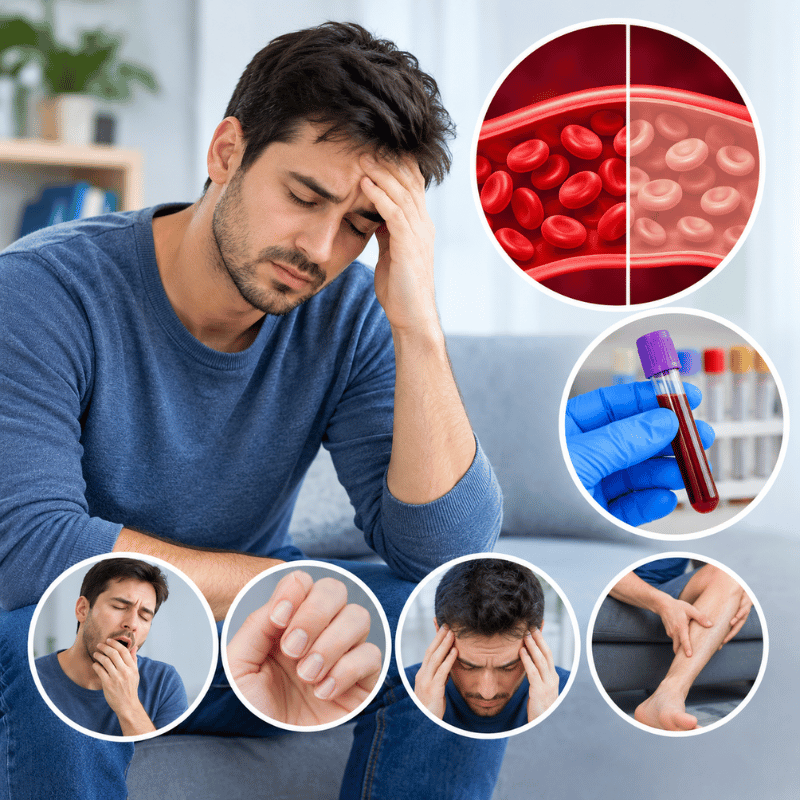
Ongoing tiredness, pale skin, shortness of breath, dizziness, headaches, a fast heartbeat and cold hands and feet.
Treatment
Most people are treated with iron tablets, taken once a day or on alternate days, along with treating the cause. Diet alone is not usually enough to correct anaemia.
Causes
Not enough iron in your diet, blood loss such as heavy periods or bleeding in the gut, pregnancy, or poor iron absorption from conditions like coeliac disease.
Get checked
Tiredness, paleness or breathlessness that does not improve is worth a blood test, so the cause is found and not missed. If you've already been told you're anaemic or low in iron, it's important to find out why.
Urgent
Black or bloody stools, weight loss you can’t explain or a lasting change in your bowel habits need prompt review. If you have chest pain, fainting, severe breathlessness or are vomiting blood, call 999 or go to A&E.
Next step
A consultation with Dr Ahmad to confirm the diagnosis with blood tests, look for the cause and agree a plan.
The condition
What is iron deficiency anaemia?
Iron deficiency anaemia is a common condition in which the body doesn’t have enough iron to make haemoglobin, the part of red blood cells that carries oxygen. When too little oxygen reaches your body, you can feel tired, breathless and weak. It often builds up slowly over months, which is why many people don’t notice it at first. It is usually very treatable, but it’s important to find out why your iron is low.
Iron deficiency anaemia is diagnosed with a simple blood test that checks your haemoglobin and iron levels. Dr Ahmad will listen to your symptoms and ask about your diet, periods, pregnancies and any medicines you take. For men and for women after the menopause, UK guidelines recommend checking the gut, usually with a gastroscopy and colonoscopy, because slow bleeding from the gut is a common hidden cause. For younger women, tests depend on symptoms, age and family history.
Iron deficiency anaemia often causes:
- Tiredness, weakness or pale skin
- Breathlessness, dizziness or a racing heartbeat
- Headaches, cold hands and feet, or brittle nails
Low iron? Your gut may hold the answer
Iron deficiency is common, and it is not always down to diet. When your iron stays low, or keeps coming back, it is important to find out why. Sometimes the cause is in the stomach or bowel, where slow bleeding can go unnoticed for months.
What we look for
Two simple camera tests let us check the whole length of the gut. Gastroscopy looks at the food pipe, stomach and duodenum. Colonoscopy looks at the large bowel and rectum. Between them, they can find the common causes of low iron, such as ulcers, inflammation, coeliac disease, polyps and, rarely, cancer.
Causes outside the gut
Not every case starts in the gut. Heavy periods and too little iron in the diet are common causes too. Aspirin and anti-inflammatory medicines can also cause bleeding from the stomach. A careful history helps us decide which tests you need.
Why it matters
Finding the cause means the right treatment, not just iron tablets. If something needs attention, it is better found early.
Book a consultation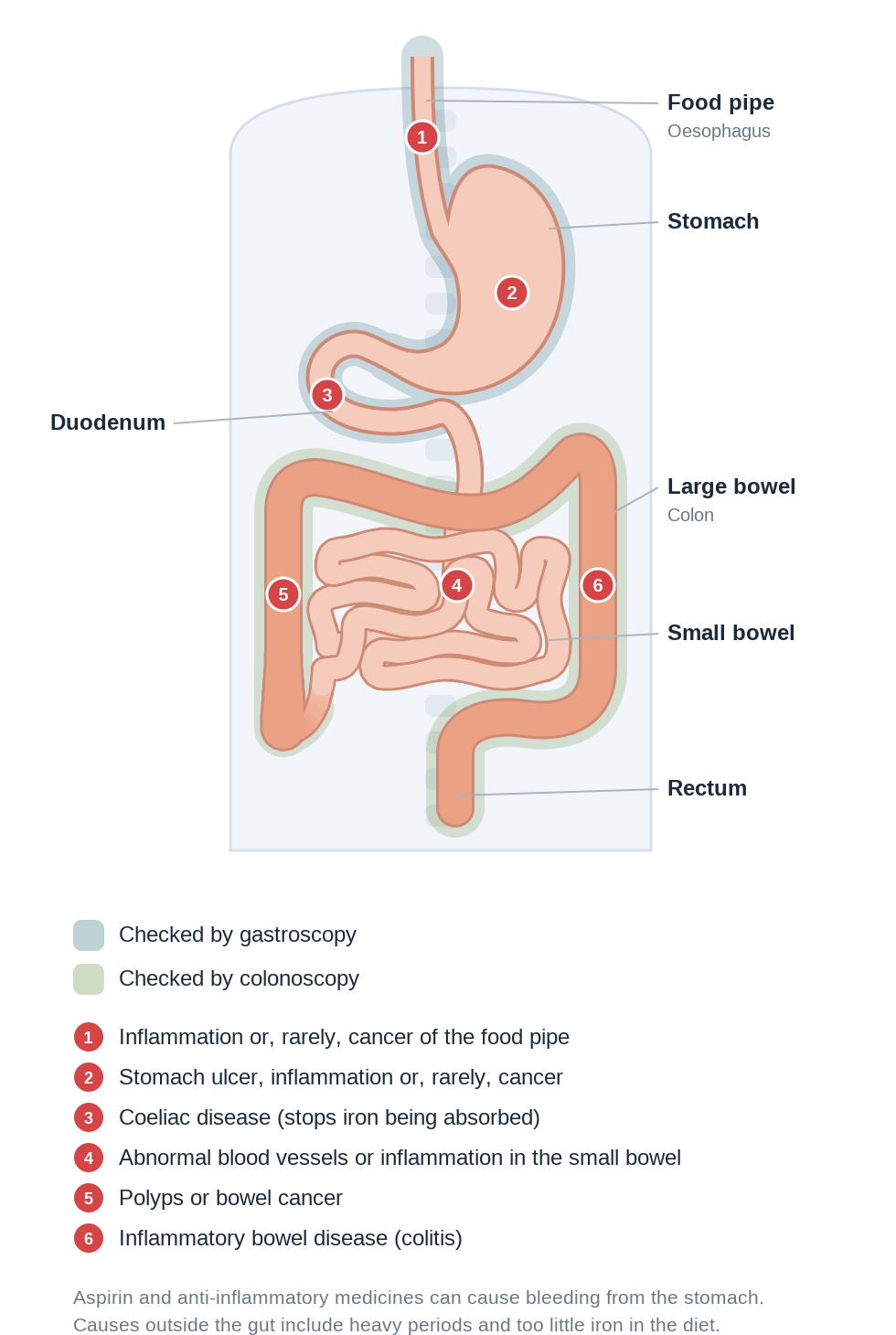
Possible causes of iron deficiency anaemia
Low iron can have more than one source, and it differs from person to person. Finding yours helps guide treatment.
Low iron intake
Eating too little iron-rich food, such as meat, beans, lentils and leafy greens, over a long time.
Heavy periods
Heavy or long periods can use up iron faster than your body can replace it.
Bleeding in the gut
Slow bleeding you can't see, for example from an ulcer, inflammation, a polyp or, less often, bowel or stomach cancer. It can go unnoticed for months.
Poor absorption
Coeliac disease, H. pylori infection, previous stomach surgery or long-term acid-reducing medicines can reduce how much iron your gut absorbs.
Pregnancy
Your body needs extra iron during pregnancy, so levels can drop if your stores were already low.
Some medicines
Aspirin, anti-inflammatory painkillers and blood thinners can cause slow bleeding from the stomach or bowel.
Why choose Dr Ahmad for your iron deficiency anaemia assessment?
Expert care, clear answers and support at every step.
Consultant-led care
Dr Ahmad sees you himself, from your first consultation to your results. He is a consultant gastroenterologist with a PhD from Imperial College London, has published widely on endoscopy and has carried out more than 4,500 procedures.
Seen quickly
Consultations are usually available within 1 to 2 weeks, including evenings and weekends, in person or remotely.
Tests and support in one place
Blood tests, and a gastroscopy or colonoscopy if needed to look for the cause, can be arranged through Dr Ahmad, so you aren’t passed between services. He can also refer you to a specialist dietitian at Welbeck London. Gastroscopy and colonoscopy can usually be done together, on the same day.
A plan you understand
You leave with a clear explanation of what may be causing your symptoms, which tests (if any) you need, and what happens next.
How iron deficiency anaemia is diagnosed
From your first appointment to a clear answer.
Consultation
Dr Ahmad listens to your symptoms, diet, periods and any medicines you take.
Examination
A check for signs of anaemia, such as pale skin, and an examination of your tummy.
Blood tests
Blood tests check your haemoglobin, iron levels and iron stores, and screen for coeliac disease and other causes.
Gastroscopy and colonoscopy
Often done on the same day, to look for bleeding or causes of poor absorption, with biopsies to check for coeliac disease.

Your specialist, Dr Ahmir Ahmad
Consultant Gastroenterologist and Specialist Endoscopist
Dr Ahmad qualified in medicine from University College London in 2010. He completed a four-year specialist endoscopy fellowship at St Mark’s Hospital from 2018 to 2022, and a PhD at Imperial College London in 2023 on improving the quality of colonoscopy, so that polyps and early bowel cancers are found more reliably. He has a special interest in finding the cause of iron deficiency anaemia, including bleeding from the bowel, and in making sure other causes of your symptoms are not missed. He continues to perform endoscopy at St Mark’s, The National Bowel Hospital, and has carried out more than 4,500 procedures.
- Qualifications MBBS, BSc, MRCP, PhD
- Professional registration GMC 7090128 · Specialist Register
- Practises at Welbeck London · Nuffield Brentwood · Spire Hartswood · St Mark’s TrustPlus
- Experience 4,500+ procedures
Medically reviewed by Dr Ahmir Ahmad. Last reviewed 28 October 2026.
Testimonials
What patients say
What patients say about their consultations and procedures.
“Dr Ahmir made me feel so comfortable and safe and informed throughout my consultations and procedure. I was very nervous but his professionalism and care made the entire process very comfortable and I would highly recommend him. Thank you!”
“I was dealt with very sympathetically and professionally by Dr Ahmad, this was over the course of three consultations and an endoscopy. Any worries I had about the treatment were unfounded and the endoscopy was a quick and painless procedure. I was quickly reassured there were no significant issues and have been discharged back to my GP. So pleased to have been under Dr Ahmad’s care.”
“Dr Ahmad is very professional and has excellent personal skills. I felt immediately impressed and assured on his high level of expertise. Took a good amount of time to throughly look at my issues. Then reacted immediately with a quick plan to move forward. Excellent professional.”
Frequently asked questions
-
No. Iron deficiency means your body’s iron stores are low. Anaemia means your haemoglobin (red blood cells) is low. Iron deficiency is the leading cause of anaemia in the UK, but you can be iron deficient without being anaemic yet. Anaemia can also have other causes, such as low B12 or folate, or chronic disease.
-
Early signs are tiredness, low energy, poor concentration, irritability and hair loss. As it progresses you may notice shortness of breath, heart palpitations, pale skin, headaches, dizziness, a sore tongue, brittle nails, or cravings for non-food items such as ice. Many people have no symptoms at first.
-
- Blood loss: heavy periods, or bleeding from the gut (ulcers, piles, polyps, bowel cancer).
- Higher needs: pregnancy and breastfeeding.
- Low intake: poor diet, including vegetarian or vegan diets that are not well planned.
- Poor absorption: coeliac disease, H. pylori infection, gastric surgery, or long-term acid-reducing medicines.
-
A blood test is needed: a full blood count and ferritin (the best single marker of iron stores). Because ferritin can read falsely normal during infection or inflammation, a CRP or transferrin saturation test is often added. Don't start iron before testing, as it can hide the result.
-
- Depleted stores: ferritin is low, but haemoglobin is normal.
- Iron-deficient red cell production: iron supply to the bone marrow falls, and you may feel symptoms.
- Iron deficiency anaemia: haemoglobin drops and red cells become small and pale.
-
There is no instant fix. Treatment is iron tablets (usually ferrous sulfate or fumarate) plus treating the underlying cause. Haemoglobin should start rising within 2 weeks and most people feel better in 3–4 weeks, but full recovery takes 2–4 months. Keep taking iron for about 3 months after your blood count normalises to refill your stores. Diet alone is not enough to correct anaemia. If tablets fail or aren’t tolerated, iron infusions (IV iron) work faster. Dr Ahmad can arrange an iron infusion if needed.
-
- Take iron on an empty stomach if tolerated (30 minutes before food, or 2 hours after).
- Take it with vitamin C, such as orange juice.
- Leave 2 hours between iron and tea, coffee, calcium, antacids or dairy.
- Eat iron-rich foods: red meat, liver, oily fish, eggs, beans and lentils, tofu, dark green leafy vegetables, and fortified cereals.
- Eat plant-based iron with vitamin C foods to boost absorption.
-
Common reasons:
- Tea, coffee, calcium or antacids are blocking absorption.
- Acid-reducing medicines (PPIs) are reducing absorption.
- The dose is too low or the course too short.
- You are still losing blood (heavy periods or gut bleeding).
- You have malabsorption (coeliac disease, H. pylori).
- The diagnosis is wrong (thalassaemia trait, B12 or folate deficiency, chronic disease).
If your haemoglobin hasn’t risen after 4 weeks of treatment, let Dr Ahmad or your GP know, as this can mean ongoing bleeding or poor absorption.
-
Ferrous sulfate, fumarate and gluconate all work, and none is clearly gentler than the others. Side effects (nausea, constipation, diarrhoea, black stools) are common. Tolerability improves with:
- a lower dose
- alternate-day dosing, which UK guidance now supports and which works as well as daily dosing for most people
- taking it with food
- liquid or syrup forms
If you still can’t tolerate tablets, ask about IV iron. Taking iron with food reduces side effects but also reduces absorption, so try alternate-day dosing on an empty stomach first.
-
Iron can be lost through slow bleeding, or not absorbed properly, at either end of the gut. A gastroscopy checks the food pipe, stomach and duodenum for ulcers, inflammation and, less often, cancer, and takes biopsies for coeliac disease. A colonoscopy checks the large bowel for polyps, inflammation and bowel cancer. UK guidelines recommend both for men and for women after the menopause with new iron deficiency anaemia. They are usually done on the same day, with one set of sedation.
-
Yes. This is the usual approach. You'll take bowel preparation as for a colonoscopy, and both tests are done one after the other during a single visit.
-
Usually, yes, for about a week beforehand, because iron makes stools dark and sticky and can make the bowel harder to clean. The pre-assessment team will advise regarding this.
Get in touch
Have a question about iron deficiency anaemia? We’re happy to help.
-
Call now
Phone
07435 081678Dr Ahmad’s secretary, Monday – Friday, 9:00am – 5:00pm
-
Send an email
Email
clinic@drahmirahmad.com
Clinic times
-
Monday12:00–14:00Welbeck London
-
Tuesday08:00–09:00St Mark’s TrustPlus
-
Wednesday10:30–12:00Spire Hartswood14:00–16:00Nuffield Brentwood18:00–20:00Welbeck London
-
Saturday09:00–11:00Spire Hartswood or Nuffield Brentwood
-
Monday
Struggling with iron deficiency anaemia?
See Dr Ahmad at Welbeck London, Nuffield Brentwood, Spire Hartswood or St Mark’s TrustPlus, for a clear diagnosis and a plan to manage your symptoms. Consultations are available in person, by video or by phone.