







★★★★★
“Dr Ahmad is an extremely professional and knowledgeable doctor that instills confidence in his patient. Despite an unexpected event during a colonoscopy he was calm and reassuring and I cannot fault his aftercare.”
A colonoscopy uses a thin, flexible camera to examine the whole lining of your large bowel. It can help find the cause of symptoms such as bleeding, abdominal pain, a change in bowel habit or anaemia. If polyps are found, Dr Ahmad can usually remove them during the same procedure and take biopsies if needed, to help avoid a second visit.
Consultations usually available within 1 to 2 weeks, including evenings and weekends, in person or remotely.
A colonoscopy uses a thin, flexible camera to examine the whole lining of your large bowel. It can help find the cause of symptoms such as bleeding, abdominal pain, a change in bowel habit or anaemia. If polyps are found, Dr Ahmad can usually remove them during the same procedure and take biopsies if needed, to help avoid a second visit.
Specialist colonoscopist at St Mark’s National Bowel Hospital · PhD in
colonoscopy · 4,500+ procedures.
Consultations usually available within 1 to 2 weeks, including evenings
and weekends, in person or remotely.

22 verified patient reviews
The procedure
The key facts about your colonoscopy with Dr Ahmir Ahmad, from preparation to results.
How long
The examination takes about 30 to 45 minutes.
Your visit
Plan for around half a day, including recovery.
Comfort
Choose from no sedation, light sedation or, at Welbeck London, deeper sedation given by an anaesthetist.
Before
A pre-assessment call, a low-fibre diet, then a bowel-cleansing preparation.
Results
Your report is shared with your secure patient portal on the day. If samples are taken, you’ll have a clinic follow-up about two weeks later.
Where
Welbeck London (Marylebone), Nuffield Health Brentwood Hospital, Spire Hartswood Hospital (Brentwood) and St Mark’s TrustPlus at Northwick Park Hospital (Harrow).
The procedure
A clear look at the whole lining of your bowel
A thin, flexible camera is passed through your back passage and gently guided around your large bowel. If Dr Ahmad finds a polyp, he will remove it if it is safe to do so at the time. He can also take small tissue samples (biopsies) for testing.
Dr Ahmad carries out every procedure himself, supported by the hospital’s experienced endoscopy nursing team. The examination takes about 30 to 45 minutes.
In every section, Dr Ahmad looks for polyps, inflammation, bleeding and other changes to the lining.
From arrival to going home, plan for around half a day, including preparation, the examination and recovery.
The pre-assessment team will contact you to go through your medical history and the medicines you take. They’ll explain any changes you need to make to your medicines and how to take your bowel preparation.
A nurse will admit you and check your details. Dr Ahmad will explain the procedure, answer your questions and ask for your consent. At Welbeck London, the anaesthetist will also see you to discuss your sedation options.
Dr Ahmad gently guides the colonoscope around your large bowel to examine the lining. You may feel some pressure, bloating or cramping as the bowel is gently inflated with carbon dioxide. Any polyps found are removed if it is safe to do so at the time, and biopsies are taken if needed. If there are multiple or very large polyps, their removal may need to be planned as a separate therapeutic procedure.
You’ll rest in the recovery area, where you can have a drink and a light snack. Dr Ahmad will explain what he found, including any significant findings, and your report will be shared with your secure patient portal. If you had sedation, an adult must take you home, and you shouldn’t drive, drink alcohol or sign important documents for 24 hours.
Expert care, clear answers and support at every step.
Dr Ahmad performs your colonoscopy himself. He is a consultant gastroenterologist with a PhD in colonoscopy, has published on the procedure and has carried out more than 4,500 procedures.
Polyps are removed during your colonoscopy when it is safe to do so. Multiple or very large polyps may need a separate, planned therapeutic procedure.
Dr Ahmad uses modern water-assisted insertion techniques to help improve comfort. You can also choose the level of sedation or pain relief that suits you, and the team will support you throughout.
Dr Ahmad explains the findings before you go home, including anything significant, and your report is shared with your secure patient portal. If samples are taken, he’ll review the results with you in clinic about two weeks later.
Dr Ahmad’s results from the National Endoscopy Database, January 2025 to October 2026 (421 procedures).
96%
How often the camera reaches the far end of the bowel, which is needed to examine the whole colon.
National minimum standard: 90% · aspirational target: 95%
14minutes
and above 10 minutes in every quarter
The time spent carefully examining the bowel lining on the way out, when most polyps are found.
National minimum standard: mean of at least 6 minutes · aspirational target: mean of at least 10 minutes
53%
Polyps can develop into bowel cancer, so finding and removing them matters.
National minimum standard: 15% · aspirational target: 20%
Around99%
How often removed polyps are recovered and sent to the laboratory. The results guide any further treatment or surveillance.
National minimum standard: 90%
Fewer than2%
with moderate or severe discomfort
Over 98% of procedures were assessed as causing no more than mild discomfort. Around a third were performed without sedation.
BSG aim: fewer than 10% of patients with moderate or severe discomfort
These figures are from Dr Ahmad’s own audited data and are not a guarantee of individual outcomes.
Book a consultation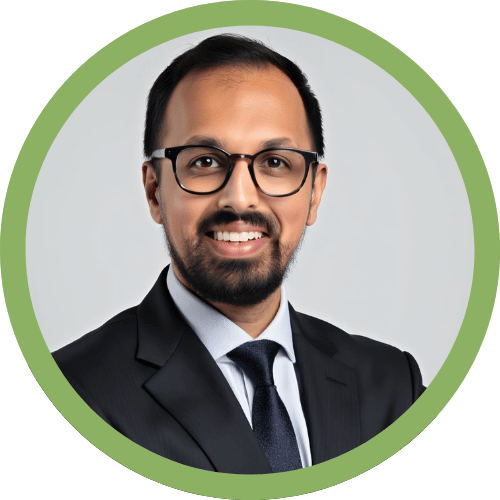
Dr Ahmad qualified in medicine from University College London in 2010. He completed a four year specialist endoscopy fellowship at St Mark’s Hospital from 2018 to 2022, and a PhD at Imperial College London in 2023 focused on improving the quality and efficiency of colonoscopy. His specialist interests include complex polyp removal, endoscopic mucosal resection (EMR) and optical diagnosis. He continues to perform colonoscopy at St Mark’s, the National Bowel Hospital, and has carried out more than 4,500 procedures.
Medically reviewed by Dr Ahmir Ahmad. Last reviewed 20 October 2026.
Testimonials
How patients felt before, during and after their procedure.
“Dr Ahmad is an extremely professional and knowledgeable doctor that instills confidence in his patient. Despite an unexpected event during a colonoscopy he was calm and reassuring and I cannot fault his aftercare.”
“I have absolute faith in Dr Ahmad, he is concise and caring at the same time and always checks to make sure that you know what’s what.”
“Dr Ahmir made me feel so comfortable and safe and informed throughout my consultations and procedure. I was very nervous but his professionalism and care made the entire process very comfortable and I would highly recommend him. Thank you!”
“Dr Ahmad was friendly and professional and very reassuring from the first moment of my consultation, taking time to explain everything. This continued on my procedure day and along with Dr Ahmad, his team at One Wellbeck were all kind and provided the support I needed when I was nervous. Everyone was really great.”
“Dr Ahmad is very professional and has excellent personal skills. I felt immediately impressed and assured on his high level of expertise. Took a good amount of time to throughly look at my issues. Then reacted immediately with a quick plan to move forward. Excellent professional.”
A colonoscopy is an examination of the lining of your large bowel (colon) and rectum using a thin, flexible camera. It can find inflammation, bleeding, polyps and other changes. Polyps are removed during the same procedure when it is safe to do so.
It can identify bowel polyps, bowel cancer, Crohn’s disease, ulcerative colitis and diverticular disease. It can also help find the cause of bleeding, a change in bowel habit or anaemia.
No. You can book a consultation with Dr Ahmad without a GP referral. Any clinic letters will usually be shared with your GP. Procedures are not usually performed without an initial consultation, so Dr Ahmad can check a colonoscopy is right for you. Clinic appointments are usually available within 1 to 2 weeks, with evening and weekend options, and you can choose a face-to-face or remote consultation.
Before your procedure, the pre-assessment team will contact you to go through your medical history and medicines. They’ll explain any changes you need to make and how to take your bowel preparation. You’ll follow a low-fibre diet for two days, then take a bowel-cleansing preparation so your bowel is empty. Our bowel preparation page has the full instructions.
Most people feel some pressure, bloating or cramping at times. Dr Ahmad uses modern water-assisted insertion techniques, which help improve comfort during the procedure, and sedation or pain relief is also available. Taking biopsies and removing polyps is painless. Tell the team at any time if you feel uncomfortable.
This depends on the type of sedation you choose. With conscious sedation, you stay awake but feel relaxed and drowsy, and many people remember little of the procedure afterwards. With deep sedation, available at Welbeck London, an anaesthetist gives you a deeper level of sedation so you are unaware of the procedure, and they will explain the options on the day. Some people choose pain relief alone or no sedation.
The examination usually takes about 30 to 45 minutes. Including arrival, preparation and recovery, plan for around half a day.
You can usually eat and drink once you are home, starting with something light. If you had sedation, an adult must take you home, and you shouldn’t drive, drink alcohol or sign important documents for 24 hours. Most people are back to normal activities the next day.
Dr Ahmad will explain the findings before you go home, including anything significant, and your report will be shared with your secure patient portal on the day. If samples were taken, you’ll have a clinic follow-up about two weeks after the procedure to go through the results.
Polyps are removed during the same procedure when it is safe to do so, and sent to the laboratory. Removing polyps is one of the main ways colonoscopy helps prevent bowel cancer. If there are multiple or very large polyps, their removal may need to be planned as a separate therapeutic procedure.
Colonoscopy is generally very safe. Some people have bloating or mild cramps afterwards. Rare complications include bleeding, particularly after polyp removal, a tear in the bowel wall (perforation) and a reaction to sedation. Dr Ahmad will explain the risks before you consent.
It depends on what is found and on your personal and family history. Many people need no routine repeat after a normal result, while people who had polyps may be advised to return after a set interval. Dr Ahmad will give you a personal recommendation.
A colonoscopy examines the whole large bowel. A flexible sigmoidoscopy looks only at the rectum and the lower left side of the bowel, needs lighter preparation and is often done without sedation. A gastroscopy examines the upper digestive tract: the oesophagus (food pipe), stomach and the first part of the small bowel.
The price depends on where you have it, the sedation you choose and whether biopsies or polyp removal are needed. You’ll receive a clear written quote before you book. If you have health insurance, check your cover with your insurer first. For a quote, call 07435 081678 or email clinic@drahmirahmad.com.
If you are using health insurance, your insurer will usually ask for a procedure code (CCSD code) before authorising your procedure. Because we won’t know until the day whether polyps need to be removed, we recommend asking your insurer to authorise both the diagnostic and the therapeutic code. If you have any questions, Dr Ahmad’s secretary can help.
| Procedure | Diagnostic code | Therapeutic code |
|---|---|---|
| Colonoscopy | H2002 | H2003 (small polyp removal) or H2350 (larger polyp removal) |
| Gastroscopy (OGD) | G6500 | G4430 |
| Gastroscopy and colonoscopy together | G8082 | G8083 |
| Flexible sigmoidoscopy | H2502 | H2503 |
Have a question about colonoscopy? We’re happy to help.
Phone
07435 081678Dr Ahmad’s secretary, office hours
Locations
clinic@drahmirahmad.com
Clinic times
Have a question about colonoscopy? We’re happy to help.
Phone
Dr Ahmad’s secretary (office hours): 07435 081678
Locations
clinic@drahmirahmad.com
Clinic times
Contact Dr Ahmad’s secretary on 07435 081678 or at clinic@drahmirahmad.com.
Contact the hospital where you were treated for advice:
See Dr Ahmad at Welbeck London in Marylebone, Nuffield Health Brentwood Hospital or Spire Hartswood Hospital in Brentwood, Essex, or St Mark’s TrustPlus at Northwick Park Hospital in Harrow. Consultations are available in person, by video or by phone.